
Blue Mont Manor: A Home, A History, A Welcome Restored
Updated: Dec 6, 2025

Perched above the Swannanoa Gap — a historic passage through the Blue Ridge once traveled by generations — Blue Mont Manor occupies a quietly storied stretch of Black Mountain, North Carolina.
After a thoughtful two-year restoration, the residence has been reintroduced as a retreat where historic architecture and modern living intersect with ease. Layered in mountain stone and light, the home reflects a careful balance between preservation and present-day comfort.
Now under the stewardship of Laurie and Scott Secor of Blue Mont Stays, the Manor reflects their philosophy of restrained luxury. Contemporary amenities integrate seamlessly into the home’s original framework. A chef’s kitchen anchors shared meals; spa-like baths and a fully ADA-compliant suite bring accessibility; and guest rooms retain their architectural character while embracing a tailored, modern Craftsman sensibility. The result is refined, yet unforced — historic without feeling precious.

True to its origins, the house remains a place of welcome. Each stay here supports care, access, and opportunity in Black Mountain, from creating employment pathways for neighbors with disabilities to investing in the cultural spaces that give the town its rhythm. The home belongs as much to the landscape as it does to those who gather within it.
But long before its great room filled with conversation or its porch framed summer evenings, the land beneath the Manor was already carrying centuries of its story.
The Ground Beneath: Passage & Memory
The Swannanoa Gap has always been a corridor of passage. For millennia, Indigenous peoples threaded trails through these valleys, linking Cherokee homelands to the Muskogee and Catawba beyond the Blue Ridge.
The Cherokee called it Suwa’lĭ-Nûñnâ’hi — “the trail to Ani-Suwa’li” — a name that spoke of continuity, kinship, and exchange. By the time Spanish explorer Hernando de Soto crossed in 1540, the paths were already well-worn, evidence of lives and commerce that had flourished long before Europeans arrived.

Over time, those footpaths hardened into wagon roads, then iron rails, and later highways. Each transformation bore the language of progress, its promises unevenly distributed. Cherokee families were forced west along the Trail of Tears, their removal leaving an absence that still lingers in these ridgelines. In the late nineteenth century, the Western North Carolina Railroad carved tunnels through solid rock — much of the labor performed by Black men trapped within the brutal convict lease system. Many did not survive the work. Their names went unrecorded, their graves unmarked, leaving an invisible foundation beneath the region’s industrial ascent.

In 1907, the Southern Baptist Convention established the Ridgecrest Assembly on nearby slopes. For much of the twentieth century, the campus filled each summer with choirs, preachers, and families seeking retreat and renewal — a seasonal tide of faith and music unfolding on ground already marked by far older stories of displacement and endurance.
The area itself had long been known as Blue Mont, adapted from what Indigenous people called the ridge. When the Convention acquired more than 1,100 acres, it was renamed Ridgecrest — a shift driven partly by rail and telegraph logistics, as the Blue Mont and Black Mountain stations, both abbreviated “BMT,” were often confused. In that practical change, something original slipped quietly from use.
In naming their hospitality venture Blue Mont Stays, Laurie and Scott reached back to that original designation as an act of remembrance, an acknowledgment of the land and the lives that first shaped it.

During these same decades, the parcel of land that would one day cradle Blue Mont Manor passed through the hands of early local families; Waightstill Avery in the late eighteenth century, followed by the Kerlee, Holman, and Craven families over the nineteenth and early twentieth. Their relationships to the land were pragmatic: farming, logging, subdivision. Through each transition, the house remained steady, largely unremarked, waiting.
The ridge holds it all: continuity and rupture, faith and doubt, dispossession and survival. From that layered past, the identity of Blue Mont Manor formed, a house with provenance in its bones, poised for the moment when its guardianship would again become an act of meaning.
The Legacy of Pearl Perkins
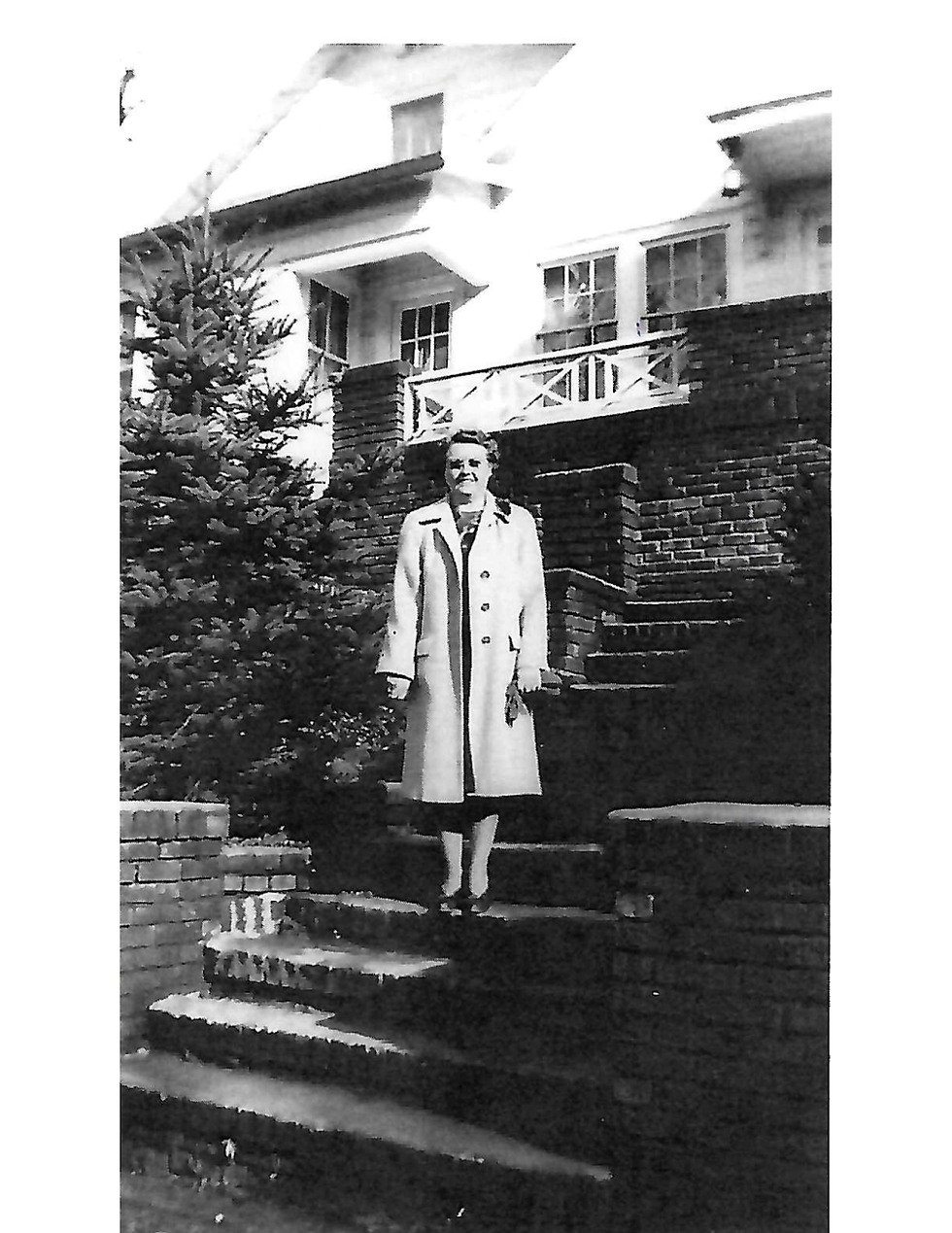
That next chapter began in 1948, when Pearl Stancil Perkins and her close friend Cora Belle Ives purchased the property. Pearl named it Dreams End — a title both poetic and prophetic. From that moment forward, the house became the setting for her life’s work in service to others: a place where domestic ritual, civic life, and family memory intertwined.
Born in 1898 in Benson, North Carolina, the only daughter among nine children, Pearl grew up self-reliant and attuned to the needs of others. At eighteen, she eloped with Norwood Lynwood Perkins. When the marriage later ended, she chose resolve over retreat. By the mid-1940s, she had settled in Ridgecrest, drawn by the refuge of the Blue Ridge and the steady bonds of her chosen community.
Her days were shaped by service; her nights by private acts of devotion. After evenings filled with guests, she called the children to kneel beside her bed in prayer “for children everywhere in the world.” Without fanfare or recognition, she mailed small checks to international aid organizations and archived the handwritten replies, simple notes of thanks from children she would never meet.
Sustaining herself required both invention and fortitude. Pearl worked as a dormitory housemother at Montreat-Anderson and Warren Wilson College, and played piano for dance classes four hours away in Smithfield, so her daughter could take tap lessons. During World War II, she volunteered with the Red Cross and USO, opening her home to soldiers on leave as an extension of the open-handed life she led in all things.

Alongside this subtle service, she maintained a steady current of enterprise. She opened The Treasure Shoppe, an antiques and gift store downtown; The Malt Shop, a cheerful roadside café painted pink; and kept a baby-blue Chrysler convertible she parked in the barn among her collected finds — a flash of glamour locals would recall for decades. Each venture was practical, yes, but also expressive, another way of offering beauty and usefulness to the world around her.
Yet Pearl’s most lasting creation was the house itself. With imagination and grit, she transformed it into a living commons, a place where children played, neighbors met, and travelers became family. Within its walls, hospitality was not a transaction but a way of life.
Decades later, after spending time with Pearl’s granddaughter, Ginger Perkins, the stories that emerged were less about spectacle and more about the genius of daily living: the habit of shared meals, the choreography of laundry lines, the tending of rooms and routines. These domestic details — small, repeated, and devotional in their own way — defined the true architecture of life at Dreams End.
Life at Dreams End: A Family Home & Guest Haven

Visitors first approached Dreams End by way of a steep, gravel drive — rutted, winding, and unapologetically narrow, where a hand-painted sign announced its name, and another offered a wink of warning: “Put ’er in low gear, honey! This here mountain ain’t no molehill!” Cars without four-wheel drive often faltered, but reaching the summit felt like crossing a threshold into Pearl’s world.

To the left of the drive, Pearl cultivated a hillside garden of rhubarb and vegetables, much of it destined for her Sunday tradition: a soup that folded the week’s remnants into a single, generous meal. Nothing was wasted; each remaining piece found its way into the next pot, the next week, the next neighbor’s bowl.
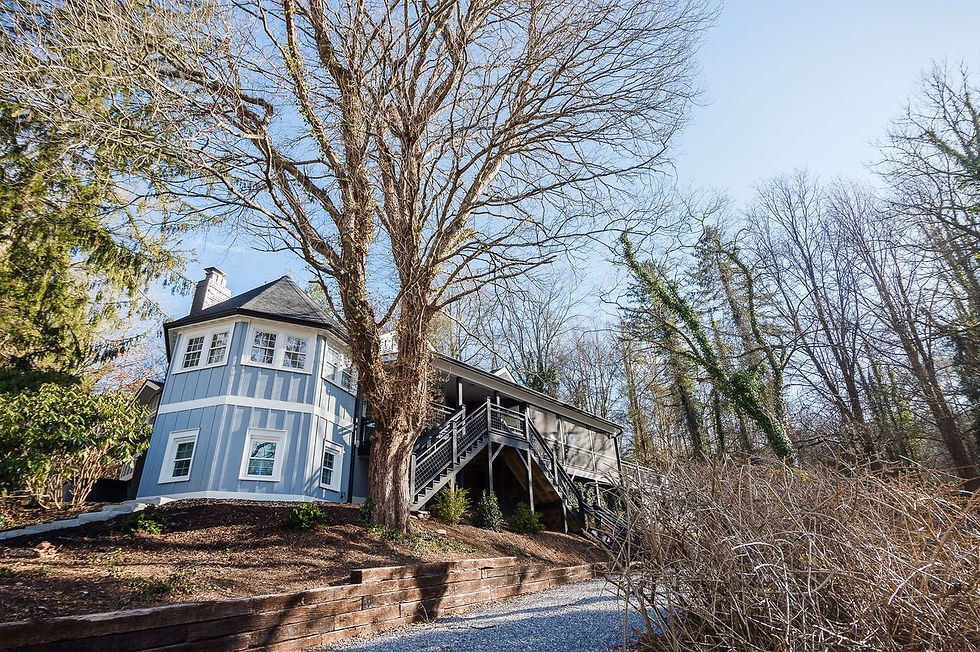
Life at Dreams End was never static. Improvisation was Pearl’s great talent. She converted the basement into makeshift apartments, fitted barns with bunk beds, and oversaw an endless choreography of linens drying on the line. The hillside house rang with children’s voices, conference guests, and neighbors drawn by celebration or a shared meal. Cousins played checkers by the hearth. The fireplace bore witness to both milestones and ordinary evenings. The front porch, too, became an archive, framed in photographs of Nana Pearl waving through tears each August as guests departed.

The great room, paneled in wormy chestnut, became the family’s stage. Rendered rare in the decades that followed by the blight that wiped out nearly all mature American chestnut trees, the lumber was, at the time of installation, relatively accessible. Its worm and insect markings, once incidental, have since become part of its distinct character and understated worth, lending the wood a rustic, unpolished beauty. Today, that legacy of texture and age is offset by sleek, intentional design choices that bring the house firmly into the present.
On Thursday evenings, Pearl’s legendary homecoming parties filled the house. Neighbors and newcomers arrived for punch and cookies before choosing triangles, cymbals, or drums as she took her place at the keys. Hymns and dance tunes soon spilled from the Hammond organ, and the room lifted into raucous, joyful jam sessions — ritual evenings that stitched strangers together and returned, year after year.

For her grandchildren, summer days felt enchanted. They chased lightning bugs across the lawn, rummaged through the attic’s rocking horses, uniforms, toys, and relics of war, and crowded into the Tower Room with its sweeping windows to watch trains thread through the valley below. The Blue Room held a soft calm; even a tiny closet was repurposed into a child-sized bedroom. Outside, the land rolled outward into playhouses, ponies, and a hand-dug swimming pool painted a bright, unmistakable blue.
While the house itself was imperfect — floors creaked, the basement smelled of damp earth, beds were improvised — it pulsed with life and made room for anyone who entered. Life followed an easy, lived-in cadence: barefoot walks to the post office for candy and letters, evenings of song drifting from the porch into the dark. But the point was never polish. Its true currency was belonging, spent daily in shared meals and borrowed places to rest.
But even houses filled with such vitality must eventually reckon with time. The 1970s ushered in change for both family and town. As Pearl’s light dimmed, Ridgecrest’s heyday began to ebb as well. Conference crowds thinned. Traditions loosened. And the current that had carried the house for decades gradually eased.
Passing the Torch & Letting Go

When Pearl passed in 1971, Dreams End stood at a new threshold. In her final years, much of the house had already fallen still; she occupied only a small portion while the rest slipped into a kind of hibernation. From her home in Louisiana, Pearl’s daughter, Eleanor Cole, tried to manage the property from afar. But the house was unrelenting in its needs — the hillside slopes eroding under the slow pressure of time, plumbing groaning with age, the roof forever testing its strength against the next storm. From a distance, the burden was impossible to sustain.
Letting go was wrenching. To the family, the house had never been merely property—it was the vessel of their summers, their joy, their most indelible memories. To sell it was to close a lived era of themselves. As the grandchildren grew and scattered, the once-bustling home entered a gentler season of use. And yet memory clung to the place.

Though the house lay dormant for a time, its life did not pause. From the late 1970s until its most recent purchase in 2021, the property entered a long and steady period under the care of Miss Susan Hensley. During her decades of ownership, the house remained in continuous service, accommodating generations of conference visitors and becoming a permanent home for more than 170 foster children over the course of more than thirty years. In her hands, the spirit of Dreams End lived on as daily service to living, growing families
Even decades later, when descendants return to stand on the porch or trace their way through its halls, Pearl’s presence seems to linger in the warmth of the chestnut-paneled walls, the smooth hollows worn into hardwood floors, and the light pooling across the Tower Room. For them, the house had always been more than a structure. It was kinship and fellowship, the joy of shared presence, an echo, perhaps, of Suwa’lĭ-Nûñnâ’hi, where exchange once defined this ridge.
The house remained in waiting — as houses sometimes do — for the moment its next life could begin in earnest, when both what it required and what it offered could be taken up together.
A Historic Retreat, Reimagined

More than a century after its foundational masonry was laid in 1918, the house has been reintroduced as Blue Mont Manor. Following a meticulous two-year restoration, it stands once again in full use — not stripped of its character, but animated by the same energy that shaped its earliest years.

Guiding this transformation were Laurie and Scott Secor of Blue Mont Stays, who partnered closely with the home’s new owners to usher it into this next phase. Their role was one of architectural vision, refining the space with patience and intention while preserving the integrity of what the house had already been given. Through their direction, the home was not only restored but thoughtfully prepared for its new life as a luxury retreat, gently carrying its past into the present without disturbing its soul.

Original wallpaper peeks through in select rooms, a modest trace of past lives. Schoolhouse doors, salvaged and refinished, now separate the kitchen from the utility room. Repurposed church pews lend warmth and gravity to the entryway and frame the grand staircase at the rear entrance. At the heart of the home, the central fireplace remains a constant — its mosaic of stones, some glistening and others worn smooth by generations of hands, marking the house’s place in its evolution.

Most remarkable is how the new interventions invite the present without erasing the past. A chef’s kitchen, outfitted with upscale appliances, was designed for communal meals, both celebratory and intimate. An expansive wraparound porch blurs the boundary between indoors and out, drawing the ridgeline into view and pulling the house back into its landscape.

Inside, five bedrooms and five bathrooms — including a fully ADA-compliant suite and the private Garden Suite — provide space for up to ten guests with comfort and grace. Each room is shaped with intention: crisp linens, fine detailing, and spa-like finishes that restore both body and spirit. Beyond the doors, nearly three acres unfold into gardens that shift with the seasons, a private hot tub tucked into the hillside, and porches that hold pale mornings and firelit evenings against the sweep of the surrounding ridgeline.

In its present form, the home is now a historic residence while remaining a living setting for connection. From quiet weekends for small groups to lively reunions for large families and celebrations, it fulfills its original charge: to host, to shelter, and to remain a house alive with meaning.

A Stay with Purpose: Blue Mont Stays’ Stewardship
For the Secors, Blue Mont Manor has never existed as hosting alone. Since founding Blue Mont Stays in 2019, their work has been guided by a wider responsibility to place and community — a conviction tested in September 2024, when Hurricane Helene devastated much of Western North Carolina.

Built safely above town, the Manor emerged from the storm intact. In the days that followed, it became a center of relief. Laurie and Scott cooked meals, shared supplies, opened showers and laundry, and created a no-cost hub that neighbors relied on for weeks; more than seventy-five meals served, hundreds of showers taken, countless loads of laundry run. The numbers matter less than the steadiness the house offered when so much else had been lost. In crisis, the Manor simply lived out its oldest instinct: to shelter and serve.

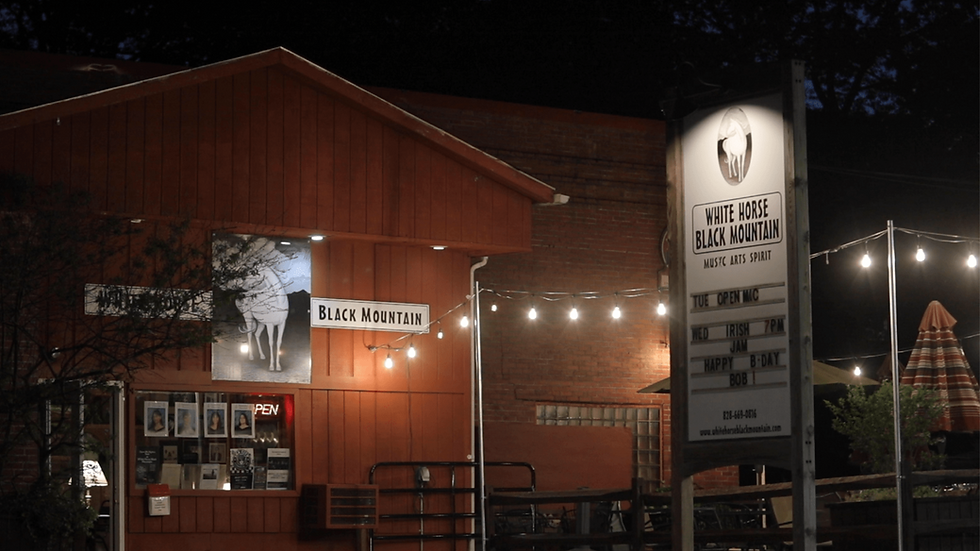
Every stay now carries a purpose beyond the guest experience: supporting creative venues such as White Horse Black Mountain, contributing to regional recovery efforts, and funding opportunities for neighbors who too often find doors closed elsewhere. In this way, the Manor continues the ethic first set in motion by Pearl — an active commitment to inclusion, now shaped with conviction and built to last.
Continuity of Place: Past Meets Present
What Nana Pearl created was more than a boarding house or a seasonal retreat. It became a community center, where people crossed paths, melody spilled into the night, and strangers became family. That spirit traveled through a century of change, sustained in gesture and memory. And now it stands renewed, honoring both what has been and what will be.

For Laurie and Scott, the house is a living annal, one that began with the Perkins family and continues to unfold with every guest. Each stay adds a new record, a reunion, a celebration, a retreat from the world. Around it all, the ordinary sounds of place persist: the rustle of trees in the wind, rain on the roof, the distant click of wheels through the Gap.
The home holds all of this now. Families revolve around the kitchen with wine glasses in hand. Guests sink into the warmth of the hot tub as the ridgeline darkens and stars emerge. Here, the greatest luxury is the way the place lets you settle — and the rare feeling of being wholly at home becomes its unspoken gift.
What began as Dreams End now lives on as Blue Mont Manor: a house where the past remains present, and where new generations will continue to find their way, exhale, and feel at home.
Learn More:

Comments